Maple Army: Crafting Warmth with Thanksgiving Font
Visualizing the Harvest: What Makes This Typeface Unique
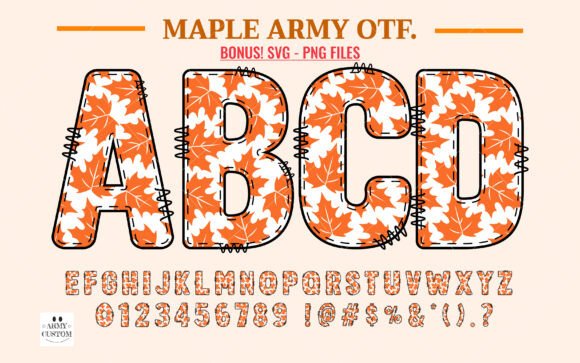
There is a specific kind of visual magic that happens when typography captures a season. Maple Army, specifically through its "Thanksgiving Maple Leaves" style, doesn't just spell out words; it brings the sensory experience of autumn to the page. This isn't your standard serif font or a clean sans serif font. Instead, it operates as a specialized display font that functions almost like a piece of art. The defining characteristic of this typeface is the intricate integration of maple leaf patterns directly into the letterforms. It creates a texture that feels organic, moving away from the rigid geometry of modern typography to embrace something more tactile and seasonal.
The "Thanksgiving Maple Leaves" iteration is particularly striking because it balances complexity with legibility. While it is undoubtedly a creative font filled with autumnal details, the silhouette of each character remains distinct enough to be understood immediately. This makes it a powerful design asset for projects that need to convey warmth, gratitude, and the cozy atmosphere of the harvest season. Whether you are working on a digital banner or a physical print, the font carries a visual weight that suggests tradition and celebration.
Strategic Applications for Designers and Entrepreneurs
Understanding where to deploy a font like Maple Army is just as important as the font itself. Because this is a highly stylized premium font, it shines brightest when used for impact rather than body copy. Think of it as the visual equivalent of a centerpiece.
For those in branding and marketing, this typeface is a secret weapon for seasonal campaigns. If you are a small business owner preparing for the Q4 rush, incorporating this font into your social media graphics can instantly signal to your audience that you are in the holiday spirit. It works exceptionally well for:
- Logo Design: Specifically for bakeries, pumpkin patches, or craft stores looking for a temporary seasonal logo or a permanent identity that leans into rustic charm.
- Packaging Design: Imagine this font on a label for autumn spice blends or artisanal jams. The leaf-textured strokes suggest natural ingredients and homemade quality.
- Editorial Design: Magazine covers or blog headers focusing on Thanksgiving recipes, fall fashion, or home decor can use Maple Army to set a thematic tone immediately.
Technical Nuances: Cricut vs. Design Software
One of the most practical aspects of working with Maple Army is understanding its technical capabilities across different platforms. In the world of design assets, compatibility can make or break a project flow.
The black version of this creative font is engineered to be versatile. It works seamlessly as an OTF or TTF file in Cricut Design Space and other standard cutting machine software. This allows for the creation of solid-color stencils and cutouts where the "leaf" patterns are represented by negative space or solid black ink.
However, the color version of the font—where the leaves might appear in vibrant oranges, reds, and golds—requires a different approach. This version is designed for raster or advanced vector environments such as Adobe Photoshop, Illustrator, Silhouette Studio Designer Edition, and Inkscape. It is important to note that these color vector files are not supported by Cricut Design Space. If you are a crafter wanting to use the full-color version for print-and-cut projects, you would need to flatten the text within a program like Illustrator or Photoshop before bringing it into your cutting software as an image file. This distinction is vital for maintaining a professional workflow and avoiding frustration during the production phase.
Font Pairing and Visual Hierarchy
When building a brand identity or a layout around a display font like Maple Army, the supporting cast matters. Because this typeface is ornamental and textured, pairing it with a busy background or another decorative font can result in visual clutter.
To achieve a balanced visual hierarchy, consider pairing the "Thanksgiving Maple Leaves" style with a clean, geometric sans serif font. The simplicity of a sans serif will allow the complexity of the Maple Army headers to pop without competing for attention. For example, using a light-weight sans serif for sub-headers and body text creates a breathing room that makes the main title feel even more special.
If your project leans more toward a traditional or rustic aesthetic, a simple serif font can also work, provided it is not too ornate. Avoid pairing it with a script font or a handwritten font that has high swashes, as this will compete with the leaf textures. The goal is to let the Maple Army typeface be the star of the show, using neutral typography to support the message rather than overshadow it.
Evaluating Fit and Practical Usage
Before committing to a premium font for a large-scale project, it is always wise to test its readability in context. While Maple Army is excellent for headers, it may lose legibility if scaled down too small, particularly in digital formats where screen resolution might blur the intricate leaf details.
Always test the font at the actual size it will appear in the final product. If you are using it for web design, ensure that the contrast between the font color and the background is high enough to make out the details of the letters. In packaging design, print a physical proof to see how the ink interacts with the paper stock; textured paper might fill in the small leaf details, while glossy paper will make them shine.
Ultimately, Maple Army offers a distinct personality that few other typefaces can match. It bridges the gap between graphic design and seasonal celebration, providing a tool that helps creators communicate the joy of the harvest. Whether you are designing a wedding invitation for a fall ceremony or a marketing flyer for a Thanksgiving sale, this font provides the artistic flair needed to make the project feel complete and thoughtfully curated.