Swiss Cheese Alphabet: A Playful Font for Bold Designers
When you're working on a project that needs to stand out, standard fonts often fall flat. You've scrolled through hundreds of sans serifs and serifs, but nothing captures that specific energy you're looking for. If your creative brief calls for something whimsical, tactile, and undeniably fun, it's time to look beyond the traditional typeface. The Swiss Cheese Alphabet offers a distinct visual language that transforms standard text into a graphic statement. It’s a premium font designed not just to be read, but to be experienced.
Visual Character and Design Details
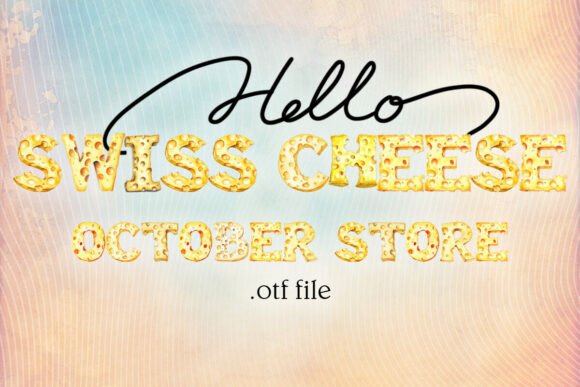
True to its name, the Swiss Cheese Alphabet is defined by its playful "holes" and rounded edges, mimicking the visual texture of the famous dairy product. However, this isn't just a gimmick; it is a carefully crafted display typeface. The design features soft, sans-serif structures that feel approachable and friendly. Each of the 24 letters and 10 numbers has been individually designed to ensure consistency in weight and spacing, despite the irregular placement of the perforations.
As a color font (Opentype-SVG), the Swiss Cheese Alphabet arrives with depth and shading built directly into the glyph. You aren't just typing a shape; you are placing a high-fidelity image of a 3D object. The yellow hue is vibrant and saturated, designed to pop off the screen or page immediately. This specificity makes it a powerful tool for designers who want the look of 3D rendering or illustration without spending hours in a vector editor. It bridges the gap between typography and illustration, offering the scalability of text with the visual richness of an image asset.
Strategic Applications in Modern Design
Understanding where to deploy a creative font like this is crucial for maintaining professionalism. The Swiss Cheese Alphabet is strictly a display typeface. Using it for body copy in a long-form article would be a mistake, as the novelty of the shapes would quickly tire the reader's eyes. Instead, its strength lies in high-impact moments where you need to grab attention instantly.
Consider the following applications for this design asset:
- Packaging Design: For food brands, specifically dairy, snacks, or children's lunch items, this font creates an instant association with the product category. It screams "tasty" and "fun" without needing additional explanation.
- Social Media Graphics: In a crowded feed, the Swiss Cheese Alphabet stops the scroll. It works exceptionally well for Instagram Stories, YouTube thumbnails, or header images where visual hierarchy is driven by imagery rather than paragraphs of text.
- Event Branding: Birthday invitations, school flyers, or playful corporate retreat materials benefit from the lighthearted tone. It sets a mood of relaxation and enjoyment before the reader even processes the words.
- Logo Design and Brand Identity: For startups targeting a younger demographic or brands wanting to appear disruptive and non-corporate, this typeface can anchor a visual identity. It communicates that a brand doesn't take itself too seriously and values creativity.
Technical Compatibility and Workflow
Before integrating the Swiss Cheese Alphabet into your workflow, it is vital to understand its technical requirements. Because this is a color font utilizing Opentype-SVG technology, it functions differently than a standard vector font file. The glyphs contain bitmap data to maintain their color and texture, which means they behave like high-resolution images within your text layer.
This technology is fully supported by professional design software. If you are working in Adobe Photoshop or Adobe Illustrator, you can type with the font just as you would with any other typeface, and the colors will render automatically. It is also compatible with Inkscape and Silhouette Studio, making it accessible for hobbyists and crafters using desktop cutting machines for stickers or decals.
However, a critical point to note is the limitation with Cricut machines. The OTF and TTF files for this product are not compatible with Cricut Design Space. Cricut software generally struggles with the complexity of color fonts, often stripping the color data or failing to cut the intricate details correctly. If you are a crafter relying on Cricut, this font is best used for print-only projects (like stickers printed on a home printer) rather than vinyl cutting.
Evaluating Project Fit and Readability
Adopting a new typeface requires a shift in design strategy. When you choose the Swiss Cheese Alphabet, you are committing to a specific aesthetic. To ensure it enhances rather than clutters your project, evaluate the surrounding design elements.
Because the font is visually "busy" with its texture and color, it pairs best with clean, minimalist backgrounds. A solid white, black, or soft pastel background allows the yellow cheese texture to breathe. If you place this font over a complex photograph or a noisy pattern, the legibility will drop significantly.
Furthermore, consider your font pairing strategy. You need a grounding element to balance the whimsy of the cheese letters. A clean sans serif font or a simple modern typography style works best for any supporting text, such as dates, locations, or descriptions. Avoid pairing it with other script fonts or handwritten fonts, as this will create visual chaos. The goal is contrast: let the headlines be the party, and let the body copy be the host.
Licensing and Commercial Usage
For entrepreneurs and small business owners, understanding licensing is non-negotiable. The Swiss Cheese Alphabet is typically offered as a commercial font, meaning you can use it in projects that generate revenue. This includes client work, merchandise, and digital products sold on platforms like Etsy or Creative Market.
However, always review the specific license agreement included with your download. Most licenses allow for unlimited commercial use in flattened formats (like JPGs, PNGs, or printed goods) but restrict the redistribution of the font files themselves. You cannot upload the font file to a website builder or app that allows others to generate text with it. Keeping your license documentation organized ensures that your brand identity remains legally sound as you scale your business.
Final Thoughts on Creative Expression
The Swiss Cheese Alphabet is more than just a novelty; it is a specialized tool for specific communication goals. It solves the problem of generic branding by injecting personality directly into the typography. Whether you are designing a menu for a deli, creating assets for a kids' channel, or simply looking to add a touch of retro-fun to a personal project, this font delivers a striking impression.
By respecting its technical limitations and pairing it thoughtfully, you can leverage this typeface to create memorable, engaging content. It reminds us that design doesn't always have to be serious—sometimes, the most effective strategy is to simply have a little fun.